
Table of contents
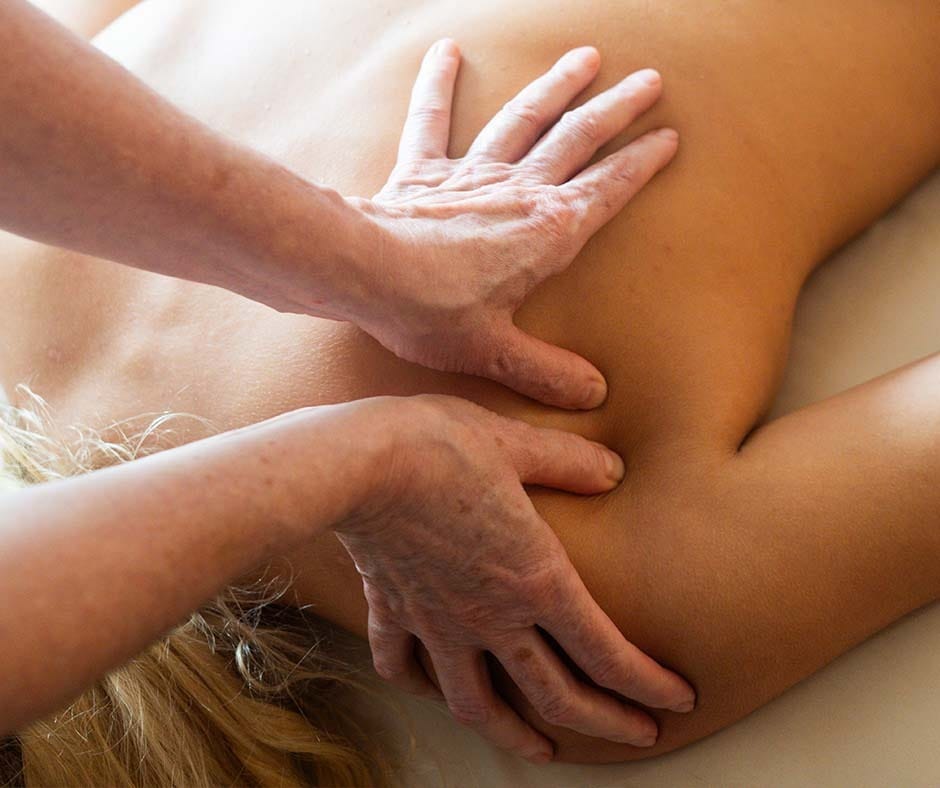
No two people need the same thing from a massage. The right approach always depends on your health, your preferences, and what you are hoping to achieve. What helps one person won’t necessarily work for another.
At ila Only Spa, we understand that everyone’s body and lifestyle are different. Our personalized massage treatments can help you find the right type and frequency of massage to address your individual concerns and support your body over time.
How Daily Stress Builds Up in Your Muscles
Muscle tension does not develop overnight. It builds up slowly from routine habits that repeat every day. Sitting for long hours without adequate movement, carrying a heavy bag on the same shoulder all week long, hunching over a screen, or simply not moving enough throughout the day all add up. On their own, none of them feel like much, but over weeks and months, this trains your muscles to sit in a shortened, tightened state and eventually, your body starts to treat that chronic tension as normal, even though it isn’t.
This is especially true for people living and working in New York, where hectic schedules and a fast-paced life seldom give the body a chance to reset. That constant strain adds even more pressure to an already demanding day. This is why so many New Yorkers carry tension in their necks, shoulders, and upper and lower backs without realizing how tight they have become until it starts changing how they move, sleep, or focus.
This is why frequency of massage matters. A single massage can offer real relief, but if it is addressing weeks or even years of accumulated tension, it needs to happen on a regular schedule, the same way you would maintain anything else under constant use. Without a consistent schedule, that relief will fade fast, and the tightness will creep back in.
So, How Often Should You Really Get a Massage?
Getting a massage about once a month is usually recommended as a safe, general baseline, and for some people, it does the job. But that is not the case for everyone. How often you should book a massage depends on your lifestyle, activity level, physical discomfort, and what you hope to get out of each session.
If you live and work in New York and keep up with its exhausting pace, this standard recommendation may not match what your body is actually dealing with. Whether you are managing everyday tension, easing recurring back pain, recovering after intense workouts, or simply making relaxation part of your routine, the right frequency is different for everyone.
Here’s how to figure out what frequency and type of massage actually fits your specific situation.
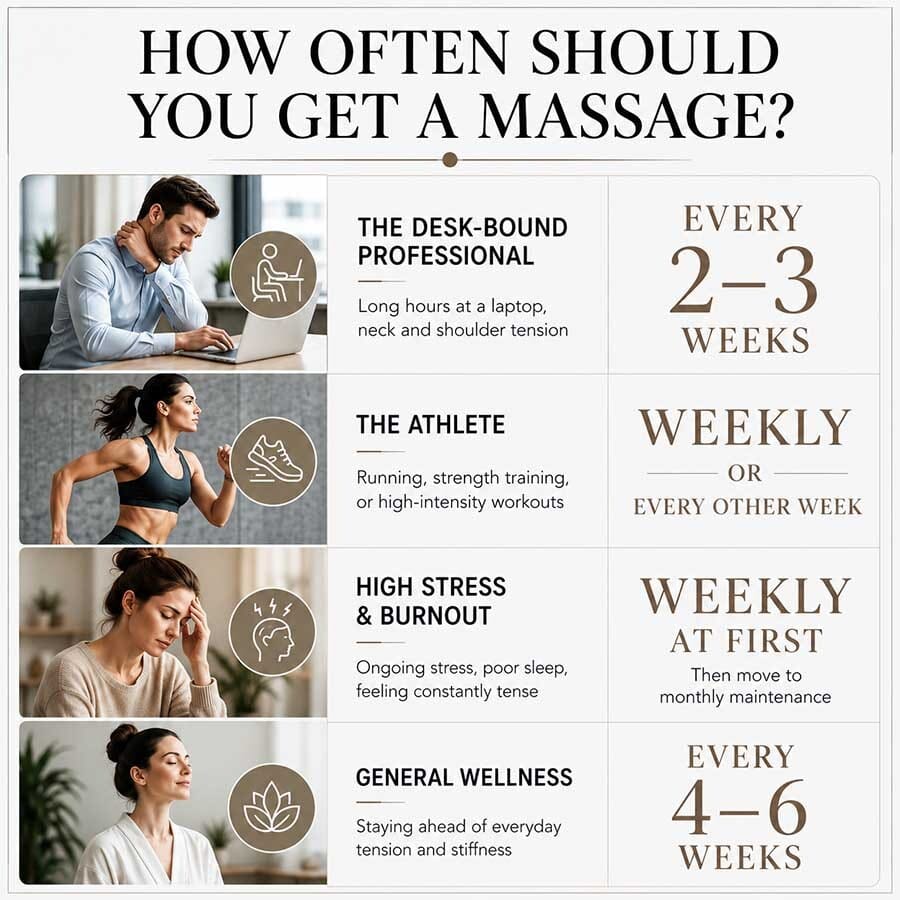
Find Your Massage Schedule
| Who You Are | How Often | Why |
|---|---|---|
|
The Desk-Bound Professional — 8+ hours a day at a laptop, dealing with tech neck | Every 2–3 weeks |
Sitting hunched over a screen day after day tightens the same muscles across your neck, shoulders, and chest. Waiting a full month between sessions lets that tension rebuild almost completely before your next appointment, so you are constantly starting over instead of making progress. |
|
The Athlete — marathon training, heavy lifting, high-intensity workouts | Weekly or every other week |
Frequent, intense training creates repeated microtrauma in the muscles. Regular massage helps flush out built-up lactic acid, keeps the fascia loose, and catches small issues before they turn into real injuries. |
|
The Burnout / High-Stress Case — constant work stress, poor sleep, feeling wound up | Weekly for the first month, then monthly |
When your body has been stuck in a stressed, wound-up state for a long time, it takes more than one session to shift it back into a genuinely relaxed state. A focused month of weekly sessions helps reset that pattern before shifting to a maintenance schedule. |
|
General Wellness & Maintenance — no specific issue, just staying ahead of tension | Every 4–6 weeks |
This keeps your muscles and connective tissue supple and maintains the circulation benefits you have already built up, without needing weekly upkeep. |
There are no official guidelines for exactly how many massages you should get. The frequencies above are meant to be a starting point. Your massage therapist or doctor can help you fine-tune a schedule and duration that works best for your specific needs.
What Kind of Massage Should You Book?
It is not only about how often you get a massage. It is also about getting the right one that actually delivers the results you are looking for. At ila Only Spa, our full range of treatments means you are never stuck choosing between relaxing and effective. Learning more about the 15 benefits of massage therapy can also help you understand how regular massage may support your overall well-being.
Here is what we offer, and what each one is best for:
Core massages
They are everyday staples, ideal for regular tension relief, recovery, and general wellness. These work well on a regular schedule, whether weekly or monthly, depending on your needs.
Specialty and targeted massages
They are designed around a specific need, from travel recovery to prenatal care. These are typically booked as needed, rather than on a fixed schedule.
- Prenatal massage
- CBD massage
- Jet lag massage (with lymphatic drainage techniques)
- Scalp massage
- Teen massage
Luxury experiences
Perfect for making a massage a special occasion, these are usually reserved for special times rather than regular upkeep.
- Four-hand massage
- Couples massage
- Release and Revive massage (uses Swedish, lymphatic, and neuromuscular techniques)
- Chair AI massage
Getting a massage can be a way to treat yourself, de-stress, or address a medical issue. Massages for injury are typically more frequent, while massages for pampering or relaxation are sought occasionally.
Your massage therapist can guide you through the variety of massages offered at ila Only Spa and help you understand what they can do.
Our massages can also be adapted to target specific problems, including:
- Back pain
- Neck pain and tension
- Anxiety and stress
- Muscle soreness and recovery
- Poor circulation (addressed through lymphatic drainage techniques)
- Sleep difficulties
Whatever you are dealing with, your therapist can recommend the massage type and technique best suited to your specific concern.
What makes every session unique and highly effective, no matter which massage you choose, is our proprietary line of organic oil blends. It is a small detail that makes a real difference. Sourced from the best ingredients, our oils do more than moisturize. They boost circulation, soothe the skin, and deepen the therapeutic effect of the massage itself, in a way that a standard spa can’t replicate.
Running the Marathon? Your Recovery Needs Structure
If you are training for the TCS New York City Marathon, massage should not wait until you are exhausted or injured. It should be a part of the plan itself, just as much as your long runs, since all that mileage puts real strain on your legs, hips, and lower back.
Regular sessions during a training block help release tight fascia, ease post-run soreness, and catch small problems before they turn into real injuries that affect your performance. Weekly or biweekly massage works best as your mileage builds, with a carefully timed session after the race to help you recover faster than rest alone.
Important to Know
While most massages are considered safe, it is important to talk to your doctor before booking a session if you have a serious medical condition. Your doctor may recommend the right type of massage that meets your body’s specific needs.
Massage is not the best option if you have certain health conditions.
Do not go for a massage if you have:
- Broken or fractured bones
- A bleeding disorder
- Open wounds or burns
- Osteoporosis
- Other serious medical conditions
If you do go ahead with a massage, stop right away and avoid further sessions if you experience pain or any other symptoms. If you have a blood clot or a history of blood disorders, consult your doctor before having a massage. During a session, blood clots could break loose and travel through your blood vessels to your heart or lungs, causing a heart attack or blocked artery.
Pregnancy — If you are pregnant, have high blood pressure, a high-risk pregnancy, or have recently had surgery, it is best to avoid a standard massage. If needed, your doctor may recommend prenatal massage to ensure you receive a safe, healthy massage during your pregnancy.
Massage does not replace medical treatment that is essential for a health condition. Do not ignore developing symptoms like chest pain, difficulty breathing, or sudden, unexplained pain. Seek medical attention right away instead of waiting for your next massage session.
Make Consistency Part of Your Routine – Book a Session Now
If you want relief to be part of a real routine rather than an occasional treat, ila Only Spa offers a luxury therapeutic experience designed to your individual goals. We also offer an exclusive membership that provides ongoing, priority access to the treatments and services you need to make personal care a crucial part of your schedule.
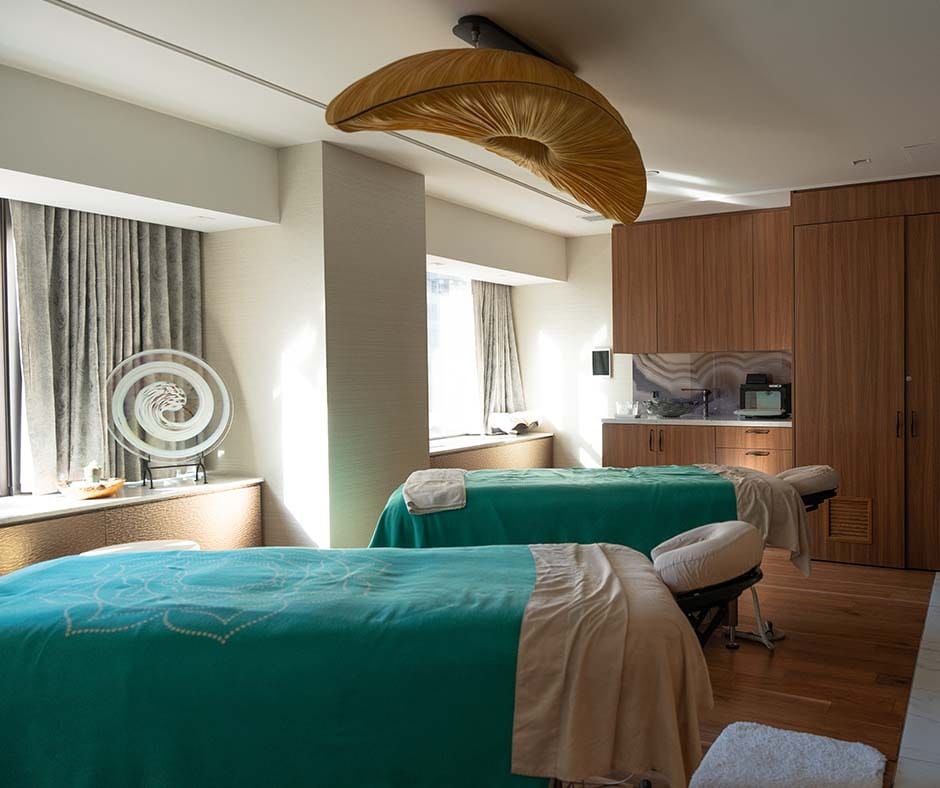
Whether you are managing corporate stress, training for a marathon, keeping up with regular workouts, or simply committing to a monthly reset, ila Only Spa provides all the support you need to maintain a healthier, more balanced wellness routine.